

Changgyeonggung Palace: Seoul’s Historical Gem with a Fascinating Past


Korean palaces evoke a sense of calm and reverence in visitors, offering a quiet retreat from modern life. Their spacious courtyards and understated elegance inspire reflection and a connection to history, while the intricate details invite curiosity and appreciation. Walking through these sites, visitors often feel a harmonious blend of awe and tranquility, as if stepping into a world where tradition and serenity coexist seamlessly.
Taking a glimpse at Changgyeonggung Palace: Symbolic Buildings which Tell Surprising Stories

Changgyeonggung Palace, located at 185 Changgyeonggung-ro in Jongno-gu, was originally built in 1483 by King Sejong as Suganggung Palace, a residence for his father, King Taejong. It often served as quarters for queens and concubines. During King Seongjong’s reign (1469–1494), it was renovated and renamed Changgyeonggung Palace. Let’s focus on some of astonishing structures of this site!

Honghwamun Gate, the main entrance built in 1484 and reconstructed in 1616, is a two-story east-facing structure featuring three front gates, intricate locks, a decorative hipped roof, and small upper doors, representing early 17th-century wooden architecture despite age and restorations.

Okcheongyo Bridge, also constructed in 1484, is a well-preserved National Treasure (No. 386), symbolizing purity with waters from Eungbongsan Mountain flowing beneath, and a carved goblin face believed to ward off evil.
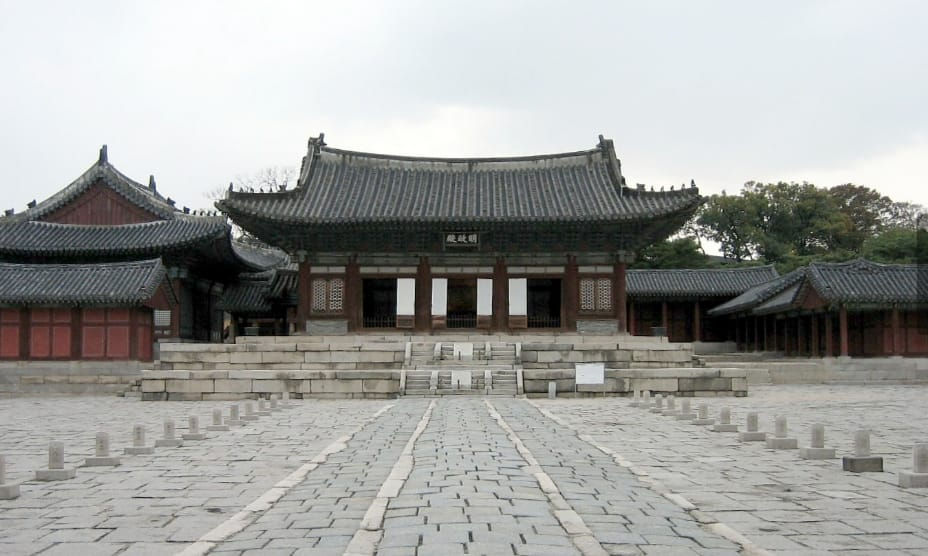
Myeongjeongjeon Hall, built in 1484 and rebuilt in 1616, served as the site for royal ceremonies, including enthronements and weddings, and is the oldest of its kind.

Munjeongjeon Hall functioned as the king’s office, linked to Prince Sado’s tragic story, where he was confined and later died. A pavilion built in 1633 on the site of the former Inyangjeon Hall hosted royal meetings and banquets.
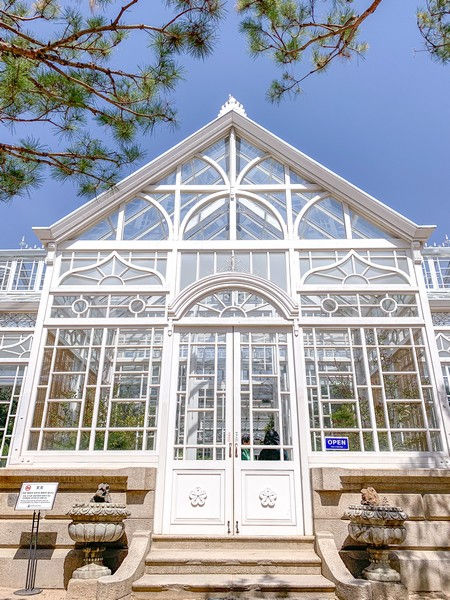
The Grand Greenhouse, established in 1909, was Korea’s first Western-style greenhouse, built to honor Emperor Sunjong, and Chundangji Pond, also from 1909, was originally a vegetable farm, renovated into a Korean style in 1986. The palace’s compact layout makes it easy to explore without getting lost.
Changgeyonggung Palace has many more wonderful structures with great history worth exploring.
Admission to Changgyeonggung Palace is 1,000 KRW (approximately US$ 0.75) for adults, and groups of 10 or more can enter for 800 KRW (about US$ 0.60). Visitors aged 65 and older, as well as children under 19, can enter free of charge. Additionally, entrance is free on Culture Day, which takes place on the last Wednesday of each month.
To learn more, you can join free 60-minute guided tours in Korean, Chinese, English, or Japanese at scheduled times throughout the day, offering a great way to explore the palace’s history with a local guide.
What you can do at Changgyeonggung Palace and other useful information
The palace offers an enchanting nighttime atmosphere with beautiful lighting that highlights its architecture and gardens year-round. In spring and autumn, visitors can enjoy media art shows like "Moonlight Lotus" and "Water’s Breath" at Chundangji Pond.

Visitors can enjoy exploring the Grand Greenhouse, a historic glass and iron structure filled with Korean plants, flowers, and bonsai, offering a peaceful atmosphere.

They can also try on traditional hanboks that are featured in k-dramas or even royal guard uniforms and various court costumes to capture photos, and immerse themselves in Korea’s royal culture. The costumes can be rented at shops like Yeinbang. The prices typically vary between ₩13,000 and ₩30,000 (~$10–$22 USD) for 4 hours to a full day,
The palace is accessible via Anguk and Hyehwa subway stations, with easy walking distances. It is a good opportunity to remind that guests can also rent hanbok for free and participate in costume trials.
The visiting hours for this palace are from 09:00 in the morning until 21:00 in the evening, with the last admission allowed until 20:00. The admission fee is 1,000 won per individual, while for groups of ten or more people, the cost is reduced to 800 won per person. A good reminder is that guests can experience traditional culture by renting a hanbok for free admission and participating in costume trials or royal reenactments.
Overall, the palace is a remarkable testament to Korea’s rich history and cultural heritage, rich in architectural beauty, historical significance, and royal legacy. It’s a place filled with elegance and prestige, worth visiting!


Comments