

Tteokbokki: The Dish That Shows Up When Korea Needs Comfort

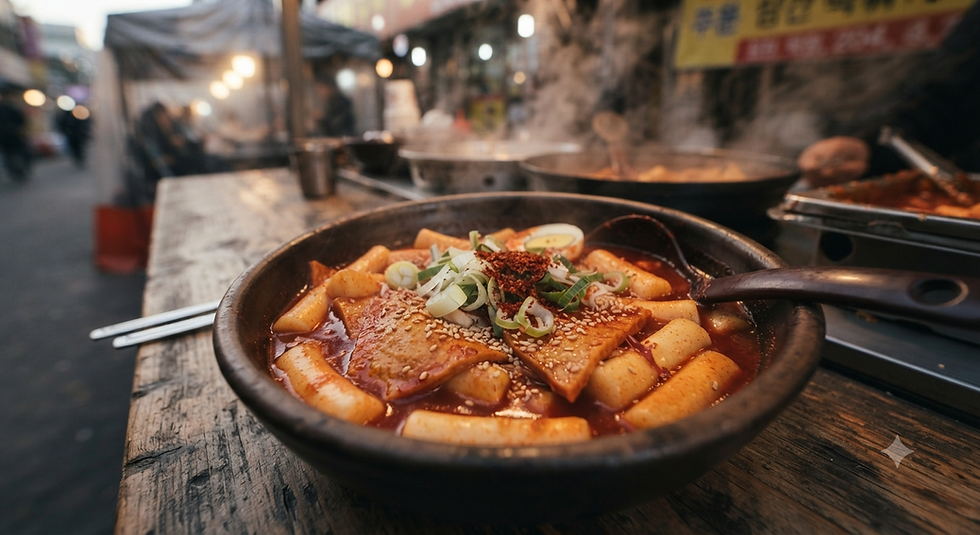
Chewy, spicy, comforting and absolutely impossible to eat just one of.
There is a particular kind of food that appears in K-dramas not because it is fashionable or beautiful, but because it is true. Tteokbokki is that food. A character has a bad day. Falls out with someone they love. Gets caught in the rain. And then, almost inevitably, they end up at a street stall, standing over a bubbling pot of deep red rice cakes, and something in them settles. Every single time I watched those scenes, I thought: I need to understand what that tastes like. What it means.
So I did what I always do when Korea pulls me in a direction: I researched it properly, tried making it at home, and fell a little bit in love with both the dish and the story behind it. And now I want to share everything I found with you.
Here is everything you need to know.
So What Exactly Is Tteokbokki?
Tteokbokki (떡볶이, pronounced roughly tuck-bok-ee) is a Korean dish made from garae-tteok, cylindrical rice cakes that are soft on the inside, chewy on the outside, cooked in a sauce built around gochujang, Korea's fermented chili paste. The result is something deeply savory, a little sweet and genuinely spicy, with a texture that is unlike almost anything else in the world of street food.
It is one of Korea's most popular everyday foods. You can find it at pojangmacha, the small tented street stalls that are a fixture of Korean city life and at bunsikjip, casual snack bars that have been serving it for decades. It is also widely available in convenience stores, supermarkets and now in restaurants across the world as Korean food continues its remarkable global journey.
But tteokbokki is not just a dish. In Korea, it carries a particular emotional weight. It is the food people eat after school, after a difficult day, after a break-up. It is affordable, warming and familiar. Ask a Korean adult what they think of when they remember childhood and tteokbokki will come up more often than you might expect.
A Story Worth Knowing
The name tteokbokki has a long history, tteok (떡) means rice cake and bokkeum (볶음) means stir-fried, but the dish as most people know it today is actually a relatively modern invention.
The version eaten at royal courts in the Joseon Dynasty was a completely different dish: soy sauce-based, non-spicy, made with thinly sliced rice cakes stir-fried with vegetables, meat and sesame oil. It was called gungjung-tteokbokki, royal court tteokbokki, and it was elegant and mild, a world away from the fiery red street food version that Koreans love today.
The transformation happened in the 1950s, in the rubble of postwar Seoul. A street vendor named Ma Bok-rim, working in the Sindang-dong neighbourhood, is most commonly credited with creating the modern version, the story goes that she accidentally dropped tteok into a pot of gochujang broth and discovered something extraordinary. Her sauce combined gochujang with other fermented ingredients, creating a depth of flavour that became immediately, irreversibly popular.
There is something quietly moving about that origin story. A dish born in difficult times, from an accident, in a working-class neighbourhood. And yet it went on to become one of the most beloved foods in the country.

Interesting fact!
Sindang-dong in Seoul is still known as the birthplace of modern tteokbokki and has an entire alley, Sindang-dong Tteokbokki Town, dedicated to the dish. If you ever visit Seoul, it is worth a visit.
What Goes Into It?

At its heart, tteokbokki is a simple dish. The magic is in how the ingredients work together.
Garae-tteok (가래떡), the rice cakes themselves. Cylindrical, white, made from pounded rice flour. They have a chewiness that is deeply satisfying and a mild flavour that absorbs the sauce beautifully. You can find them fresh at Korean markets or frozen in Asian grocery stores.
Gochujang (고추장), the fermented chilli paste that gives tteokbokki its signature deep red colour and complex heat. It is not just spicy, it is also slightly sweet and intensely savoury, with a depth that comes from fermentation. Gochujang is the soul of the dish.
Eomuk (어묵), fish cakes, almost always included in the classic version. They are mild and slightly chewy, and they absorb the sauce wonderfully, providing a counterpoint to the rice cakes.
Ganjang (간장), soy sauce, used alongside gochujang to add saltiness and depth.
Maesil-cheong (매실청), plum syrup or sugar, which adds the sweetness that balances the heat. This is one of the elements that makes tteokbokki so hard to stop eating, the way the sweet and spicy play against each other.
Anchovy or kelp broth, the liquid base of the sauce, which adds a subtle umami depth. Some recipes use plain water, but a good broth makes a noticeable difference.
Common additions include boiled eggs, spring onions, sesame seeds and sesame oil drizzled at the end. And in many versions, ramen noodles are added, creating rabokki (라볶이), a wonderful hybrid that adds extra body and a slightly different texture to every bite.
The Many Faces of Tteokbokki
One of the things I find most fascinating about tteokbokki is how much it has evolved. The original royal court version, the postwar street food version, and the modern variations are all genuinely different dishes that happen to share a name and a main ingredient.

Today, you can find:
Classic gochujang tteokbokki, the original street food version, spicy, red and deeply comforting
Gungjung-tteokbokki, the royal court version, soy-sauce based and non-spicy, mild and elegant
Rabokki, tteokbokki with ramen noodles added, a beloved combination
Cream tteokbokki, a modern variation with a rich, cream-based sauce that softens the heat
Rose tteokbokki, a combination of the cream and gochujang sauces, pink-hued and increasingly popular
Carbonara tteokbokki, a Korean-Italian fusion that is far more delicious than it sounds
Cheese tteokbokki, with melted cheese on top, served in many modern Korean restaurants
The classic version remains the most beloved. But the fact that tteokbokki has inspired so many variations is itself a sign of how central it is to Korean food culture, it is a canvas that Koreans keep finding new ways to paint on.
How to Make It at Home
The good news is that tteokbokki is genuinely not difficult to make at home. The ingredients are increasingly available in Asian grocery stores and online, and once you have gochujang and rice cakes in your kitchen, you are most of the way there.
Here is a simple, reliable version to start with:
What you need (serves 2):
300g garae-tteok (rice cakes), soaked in cold water for 30 minutes if using refrigerated or frozen
2 tablespoons gochujang
1 tablespoon ganjang (soy sauce)
1 tablespoon sugar or maesil-cheong (plum syrup)
1 teaspoon gochugaru (Korean chilli flakes), optional, for extra heat
2 cups anchovy broth or water
2 sheets eomuk (fish cake), cut into bite-sized pieces
2 spring onions, cut into 5cm pieces
1-2 boiled eggs, halved
Sesame oil and sesame seeds to finish
How to make it:
Combine the gochujang, soy sauce, sugar and gochugaru in a small bowl and mix until smooth.
Pour the broth into a wide, shallow pan and bring to a gentle simmer over medium heat.
Add the sauce mixture and stir until combined.
Add the rice cakes and fish cakes and cook, stirring occasionally, for about 8 to 10 minutes until the rice cakes are soft and chewy and the sauce has thickened to coat everything beautifully.
Add the spring onions and cook for another minute.
Finish with a small drizzle of sesame oil and a scatter of sesame seeds.
Serve immediately, tteokbokki is best eaten hot, directly from the pan.
Serving tip!
The sauce thickens quickly as it cools, so serve it as soon as it is ready. If you are making it ahead of time, add a splash of water when reheating to loosen the sauce back up.
Cooking Trick!
If you cannot find garae-tteok locally, many Asian grocery stores carry frozen Korean rice cakes. They work perfectly well, just soak them in cold water for 20 to 30 minutes before cooking to soften them.
Where to Try It in Korea
If you are visiting Korea, tteokbokki is one of those dishes where the best version is rarely found in a famous restaurant. It is found at the bunsikjip that has been on the same corner for thirty years, run by someone who has been making the same sauce since before you were born.


That said, a few places are worth knowing about:
Sindang-dong Tteokbokki Town (신당동 떡볶이 타운) in Seoul, the birthplace of modern tteokbokki, with multiple stalls and restaurants serving their own interpretations
Gwangjang Market (광장시장) in Seoul, one of Korea's oldest markets, with excellent street food including tteokbokki
Any pojangmacha or bunsikjip you pass, honestly, the best way to find tteokbokki is to follow the smell of gochujang and the sight of a red bubbling pot
Order it, stand at the counter, and eat it while it is hot. That is the correct way to have tteokbokki for the first time.
Why Tteokbokki Matters
I have been thinking about why tteokbokki appears so often in K-dramas in moments of emotional difficulty. And I think it is because tteokbokki is honest food. It does not pretend to be delicate or refined. It is warm and filling and a little bit intense, and it costs almost nothing, and it has been feeding people through hard times since the 1950s.
There is a reason it became a comfort food before it became a cultural export. It earned that status the slow way, one cold afternoon, one bubbling street stall at a time.
If you have never tried tteokbokki, I hope this has made you want to. And if you have already tried it and fallen in love with it the way most people do, welcome. You are in very good company.


Comments