

Korean Desserts You Need to Try: Best Korean Sweets & Treats


If you have a sweet tooth, Korea is going to be a very happy place for you.
From icy bowls of bingsu piled high with toppings to chewy rice cakes covered in nutty soybean powder, Korean desserts can be quite different from what you might expect. Some are familiar and comforting, while others come from long-standing Korean food traditions.
What makes Korea's dessert scene particularly interesting is the way traditional sweets continue to evolve. A centuries-old rice cake can appear on a trendy café menu, while a traditional honey cookie can be turned into a modern dessert.
So, if you are wondering what sweet treat is worth making room for on your Korea trip, here are five Korean desserts you should try!
1. Bingsu: Korea's Famous Shaved Ice

Few Korean desserts are as recognisable as bingsu (빙수).
At its simplest, bingsu is finely shaved ice served with sweet toppings. One of the best-known traditional versions is patbingsu, made with sweet red beans and often served with chewy rice cakes. Today, however, bingsu comes in a huge range of flavours, from fresh fruit to green tea and injeolmi.
One particularly popular variation is injeolmi bingsu, which combines finely shaved ice with injeolmi rice cake, soybean powder and condensed milk. Some versions also include nuts, giving you a mix of cool, creamy, chewy and nutty textures in the same bowl.
And this is one dessert where presentation can be almost as exciting as the taste. Korean cafés regularly introduce new bingsu flavours, particularly during the summer, so you may find seasonal creations that are very different from the classic red-bean version.
What does it taste like?
That depends on what you order. Patbingsu is sweet and creamy with the earthy flavour of red beans, while fruit versions tend to be lighter and more refreshing. Injeolmi bingsu adds a nutty flavour from soybean powder and a satisfying chew from the rice cake.
Why try it?
Because bingsu is one of the easiest ways to see how Korean dessert culture mixes traditional ingredients with modern café trends.
Best for: Hot summer days, sharing with friends and anyone who likes trying new flavours.
Try this first: Patbingsu for the classic experience or injeolmi bingsu if you prefer nutty, chewy desserts.
2. Hotteok: The Sweet Korean Street-Food Pancake

If you spot a hotteok stall while walking around a Korean market, stop!
Hotteok (호떡) is a popular Korean street food made with wheat or glutinous-rice dough, filled with sugar and cooked in oil. The classic version is pressed on a hot, oiled griddle until crisp on the outside, while the filling melts into a warm, syrupy centre.
And despite its English nickname, “honey-filled pancake,” the filling doesn't necessarily contain honey. The classic version uses sugar, which melts as the hotteok cooks and creates that deliciously sticky centre.
You may also come across ssiathotteok, a variation particularly associated with Busan that is filled with seeds and nuts. Busan also has a style of hotteok that is deep-fried rather than cooked on a griddle.
Why is it worth trying?
Because hotteok feels less like a formal dessert and more like a little part of everyday Korean street-food culture.
It is also best eaten fresh. The contrast between the crisp outside, soft dough and molten sweet filling is what makes it so good.
Do not expect every hotteok to be the same
The classic sweet version is probably the one most visitors will encounter, but Korean street food is full of variations. The type of filling, dough and cooking method can change depending on where you are.
Best for: Street-food lovers, cold-weather snacking and anyone who enjoys warm desserts.
Tip: Take that first bite carefully. The melted sugar inside can be very hot!
3. Yakgwa: The Korean Honey Cookie

If you want to try something that connects Korean dessert culture with its culinary history, look for yakgwa (약과).
Yakgwa is a traditional Korean hangwa, or confectionery. It is made from flour dough with ingredients including sesame oil and grain syrup, shaped into decorative forms, fried and coated with honey or
syrup. The result is sweet, rich and slightly chewy, with a texture that becomes softer as you bite into it.
Yakgwa has traditionally been associated with holidays and special occasions, including festive tables. It is also one of the Korean sweets that has recently experienced a major revival among younger consumers.
You will now find modern versions in cafés, speciality shops and even convenience stores. Some combine yakgwa with cookies or other desserts, while contemporary makers experiment with flavours such as citrus, vanilla, hazelnut and Earl Grey.
What does it taste like?
Sweet, rich and slightly chewy, with the distinctive flavour of honey or grain syrup and sesame oil.
It is quite different from a typical Western cookie, so don't expect something buttery and crumbly.
Why try it?
Yakgwa gives you a taste of traditional Korean confectionery while also showing how Korean food culture continues to reinvent itself.
It is also a practical edible souvenir. VisitKorea notes that yakgwa keeps well at room temperature and is considered a good gift to bring home.
Best for: Anyone interested in traditional Korean food, edible souvenirs and trying something with a little history behind it.
Try this first: A classic yakgwa from a traditional market, then look for a modern version if you want to see how dramatically it can be reinvented.
4. Injeolmi: Chewy, Nutty and Addictive
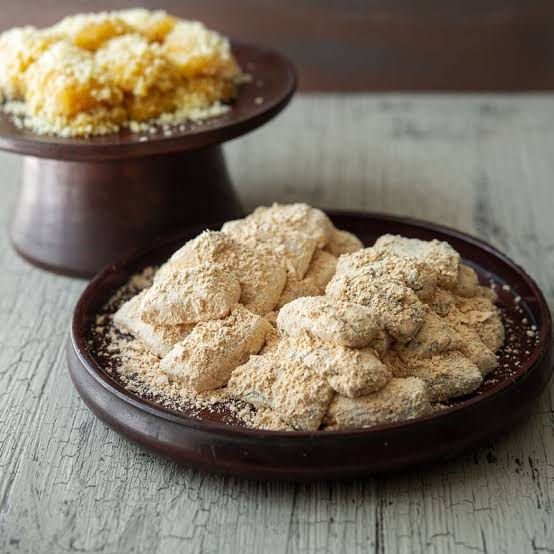
If you have never tried Korean rice cakes before, injeolmi (인절미) is a great place to start.
Unlike soft cakes or pastries, injeolmi is all about texture. It is made from sweet rice and cut into bite-sized pieces before being coated in grain powder. Yellow soybean powder is the most common coating, giving the rice cake its characteristic nutty flavour.
The texture is what makes it particularly memorable. Because it is made from sweet rice powder, injeolmi has a distinctly chewy consistency.
And Koreans have found plenty of ways to turn it into modern desserts.
Injeolmi is commonly paired with bingsu, where the chewy rice cake is combined with shaved ice, soybean powder and condensed milk. The result brings together cool ice, nutty powder and chewy rice cake in one dessert.
You may also find injeolmi paired with toast and other café desserts. VisitKorea specifically notes that its nutty flavour works well with toast and shaved ice.
What does it taste like?
Mild, nutty and chewy.
If you like mochi, the texture may feel familiar, although injeolmi has its own Korean flavour and preparation.
Why try it?
Because it shows how versatile tteok or Korean rice cake, can be. It can be enjoyed on its own, paired with traditional ingredients or transformed into a modern café dessert.
Best for: First-time visitors curious about tteok, mochi lovers and anyone who enjoys chewy textures.
Try this first: Injeolmi on its own if you want the traditional experience, or injeolmi bingsu if you want something cold and refreshing.
5. Dalgona Candy: The Sweet That Became a Global Pop-Culture Icon

You have probably seen it before, the thin, caramel-coloured Korean candy with a shape pressed into the middle.
Dalgona (달고나) is a simple candy made with sugar and baking soda. The sugar is melted and caramelised, giving the candy its characteristic toasted sweetness, before it is flattened and stamped with a shape.
Dalgona existed in Korea long before Squid Game, but the Netflix series catapulted the candy to global fame and introduced it to millions of people who had never encountered it before.
Part of the fun is the stamped shape in the middle. Traditionally, the challenge is to separate the shape from the surrounding candy without breaking it.
And if you have ever wondered whether it is easy to make, it is apparently trickier than it looks.
What does it taste like?
Very sweet, crisp and caramel-like, with a slightly toasted flavour from the caramelised sugar.
Where can you try it?
You can find dalgona at markets, supermarkets and places selling nostalgic Korean snacks. Some experiences also let visitors make their own, turning the dessert into a small activity rather than simply something to eat.
Best for: Squid Game fans, nostalgic-sweets lovers and anyone looking for a fun Korean street-food experience.
Tip: Buy one, take a photo and see if you can keep the stamped shape intact!
More Korean Sweets Worth Trying

The five above are a good starting point, but Korea's dessert scene goes far beyond them.
If you have extra time or simply a very serious sweet tooth, keep an eye out for these:
Gaeseongjuak
Gaeseongjuak is a traditional Korean sweet originating from Gaeseong, the historic city associated with the Goryeo period. It is made using sweet rice powder, flour and unrefined rice wine, shaped into small rounds, fried and finished with syrup.
It has a wonderfully chewy texture and has recently found a new audience through modern versions topped with fruit, cream cheese and other ingredients. VisitKorea notes that international visitors have even dubbed it a “K-doughnut.”
Bungeoppang Ice Cream
Bungeoppang is the familiar fish-shaped Korean street snack traditionally filled with ingredients such as red bean or custard. Modern versions have also been paired with ice cream, turning the warm street snack into a fun dessert combination.
It is particularly worth looking for if you want something that feels distinctly Korean but a little more playful than a traditional sweet.
Patbingsu
If you order bingsu and want to understand its traditional side, go for patbingsu.
This classic version combines finely shaved ice with sweet red beans and rice cakes. It remains one of Korea's best-known bingsu varieties, even as cafés continue creating new versions every year.
Sikhye
Not technically a dessert, but definitely worth trying, sikhye is a traditional Korean sweet rice drink. It is made with rice and characteristically served with cooked rice grains floating in the drink.
It is often enjoyed as a refreshing drink alongside or after a meal and is especially associated with traditional Korean food culture and holidays.
Which Korean Dessert Should You Try First?
For something refreshing: Bingsu
For a warm street-food treat: Hotteok
For something traditional: Yakgwa
For a chewy dessert: Injeolmi
For a fun pop-culture experience: Dalgona
For something less familiar: Gaeseongjuak
And if you have enough time, don't limit yourself to just one!
One of the best things about trying desserts in Korea is seeing how the old and new sit side by side. Traditional rice cakes appear in modern cafés, yakgwa is being reinvented with new flavours and combinations, and nostalgic sweets like dalgona have found a whole new international audience.
So leave a little room after your next Korean meal. You might just discover that dessert deserves its own spot on your Korea itinerary.


Comments