

A Place Where Coffee Still Tells Stories: Yangtangguk
Hidden near the quiet folds of Jirisan, far from the rush of city cafés and neon espresso bars, sits a place with a name that already feels like a story: 양탕국커피문화마을 ~ the Yangtangguk Coffee Culture Village. And if you’re wondering what yangtangguk means… well, that’s where the journey begins. Before “americano” and “latte” entered everyday Korean vocabulary, coffee had another name: 양탕국 (Yangtangguk); literally translated, it means “Western hot soup.”
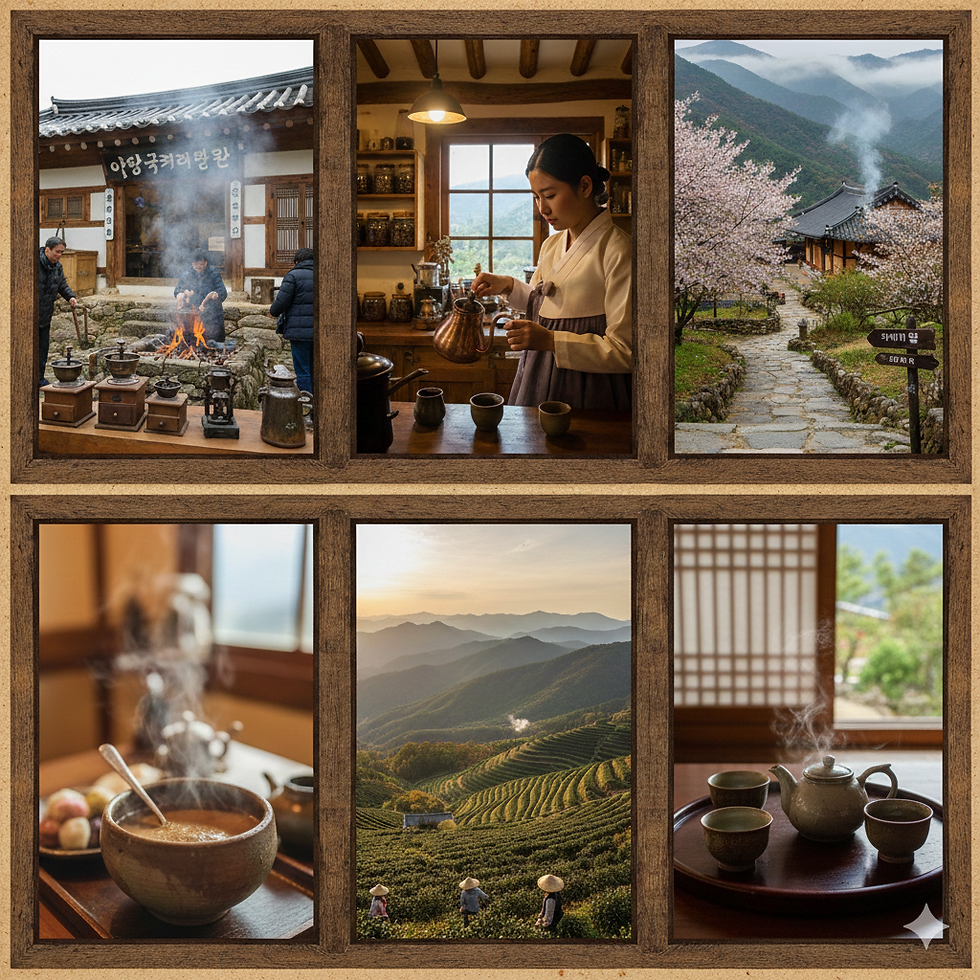
When coffee first arrived in Korea during the late Joseon period, people didn’t quite know what to make of this dark, bitter liquid brought by foreigners. The unfamiliar drink resembled medicinal broth, so Koreans described it using familiar language: yang (Western), tang (hot liquid), guk (soup). It sounded strange, almost humorous, yet deeply poetic. And here’s a fun fact: today, many Koreans don’t actually know that coffee’s earliest name was yangtangguk, or what the word itself means.
Historical records show that coffee became known among elites during Korea’s modernization period, especially through royal and diplomatic exchanges. King Gojong of Korea famously developed a taste for coffee after encountering it through foreign envoys and court officials. At the time, coffee, also called gabae or gabi, was a luxury enjoyed mostly by royalty, interpreters, and high-ranking scholars known as yangban.

Coffee in Korea began not as a daily habit, but as curiosity, status, and cultural change in liquid form.
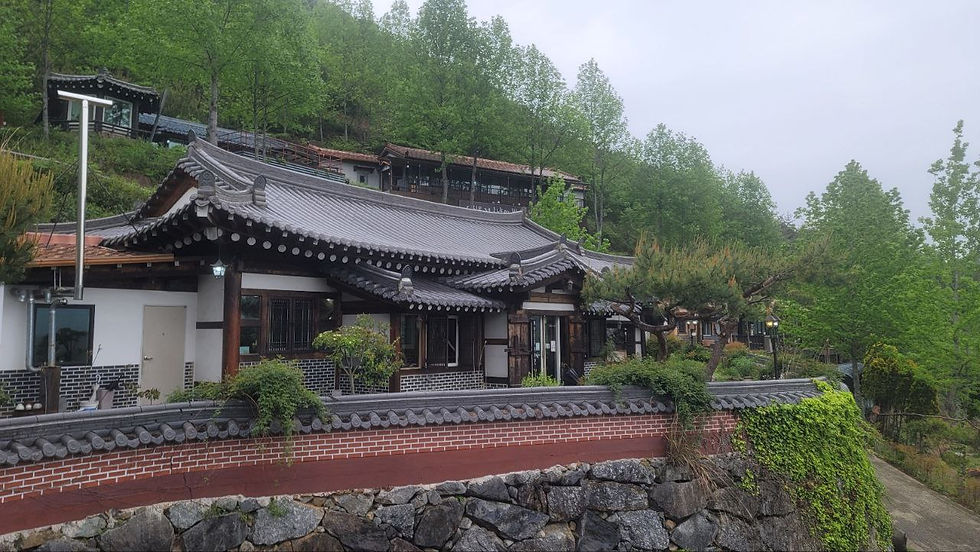
Driving toward Jirisan, the air changes first. Mountains soften the noise of the world. Roads slow down. Conversations quiet naturally. Then you arrive at Yangtangguk Coffee Culture Village, not just a café, but a cultural space built to preserve Korea’s early coffee history. The setting feels closer to a small hanok village than a modern café. Traditional architecture surrounds open courtyards, and inside you’ll find exhibitions, old brewing tools, and even antique coffee machines dating back more than a century, allowing visitors to experience how coffee evolved in Korea. Here, coffee isn’t rushed. It’s performed.
Visitors can join experiential programs where you don’t just drink coffee, you make Yangtangguk yourself, learning roasting, traditional brewing methods, and the philosophy behind slow coffee culture. Some sessions even begin early in the morning, echoing old rituals and encouraging visitors to start the day quietly with coffee and mountain air.

Reviews often mention how unexpected the experience feels, drinking coffee from a bowl instead of a cup, tasting flavors slowly, and realizing you’re participating in history rather than consuming a product. It’s immersive in a way modern cafés rarely are.
The menu reflects the café’s historical concept rather than trendy café aesthetics. It is simple with a few signature drinks such as Sabal Yangtangkuk which is a coffee served in a traditional ceramic bowl for enhanced aroma and authenticity and Tarag Yangtangkuk which is a creamy latte-style drink made with “Tarag,” a dairy ingredient reminiscent of imperial court recipes, offering a taste that is both rich and with a taste of nostalgia, but what I liked the most was the Yangtang coffee course they offer. The course has four different servings and is designed as a progressive tasting experience. It started with a coffee wine ( crafted with ingredients such as fruit enzymes and local yeasts) followed by the simple sabal coffee in a bowl, and move on to more adventurous pairings like chocolate-infused coffee extracts, and even dessert creations like affogatos. It is a unique experience of different coffee flavors that can be enjoyed while admiring the stunning view from the window. The coffee wine that combined the deep, rich flavors of coffee with the fermentation process of winemaking blended with fruit enzymes, was not only tasty, but also interesting and savory.

But the highlight is the tasting course, where different beans and brewing styles are introduced gradually, almost like a wine tasting, but softer, slower, more reflective. You begin noticing aromas differently. Conversations slow down. Phones stay untouched longer than usual. And somewhere between sips, you understand why coffee once fascinated an entire royal court.
Many visitors arrive curious about the unusual name, and leave surprised by how peaceful the experience feels. Set against the natural beauty of the Jirisan region, the café has become known as a healing travel stop: a place where the rhythm of nature and coffee align.

It’s popular with couples, travelers exploring Hadong, and people looking for something deeper than aesthetic cafés, something with narrative. Because this isn’t just coffee culture imported from abroad. It’s coffee translated into Korean history.
You sit where mountains breathe, drink what kings once discovered with curiosity, and taste a moment when Korea first opened itself to the wider world, one sip at a time.


https://keonhacai5.net/ dạo này mình thấy nhiều người nhắc nên cũng bấm vào coi thử cho biết. Mình không đọc sâu đâu, chủ yếu lướt xem giao diện với cách họ trình bày có dễ nhìn không. Vào cái là thấy trang sắp xếp khá gọn, nhìn không bị rối kiểu nhồi chữ. Mấy phần thông tin được chia thành từng khối rõ ràng nên kéo xuống vẫn theo mạch, không phải căng mắt tìm. Mình cũng để ý cái menu đặt ngay chỗ dễ thấy, bấm qua lại vài mục khá nhanh, không bị vòng vo. Nói chung kiểu trình bày này hợp với người chỉ muốn nhìn nhanh để nắm ý chính, vì các khối nội dung và bảng…
sun win mình lướt thử đúng kiểu “xem cho biết” vì thấy bạn bè nhắc hoài, chứ cũng chưa kịp chơi gì nhiều. Vừa vào là thấy tiêu đề kiểu “cổng game chính thức 2026” hiện khá rõ nên đỡ phải đoán mình đang ở trang nào. Giao diện trên điện thoại nhìn gọn, chữ không bị bé quá, kéo xuống thấy nội dung chia theo từng khối nên đọc nhanh, không bị ngợp. Mình để ý họ nói nền tảng có hệ sinh thái trò chơi phong phú với trải nghiệm hiện đại, nghe cũng hợp với cách họ làm trang. Menu đặt chỗ dễ bấm, chuyển qua lại mượt, không phải bấm đi bấm lại mới ra đúng…
rophim hôm trước thấy mấy đứa bạn share nên mình ghé thử cho biết, kiểu vào xem giao diện ra sao thôi chứ chưa kịp “chấm” phim nào. Cảm giác đầu tiên là trang mở lên khá lẹ, không bị mấy lớp hiệu ứng che hết nội dung nên nhìn phát biết ngay đang có gì. Mình lướt một vòng thấy họ chia phim theo kiểu dễ hiểu, các khối nội dung xếp gọn nên tìm thể loại cũng đỡ mất công. Thử bật một phim có vietsub thì thấy hiển thị ổn, chuyển qua lại giữa các mục cũng không bị rối. Nói chung dùng trên điện thoại vẫn mượt, kéo xuống không bị khựng. Mình thích nhất là…
https://soicau247.com/ bữa lướt thấy mọi người nói nên mình bấm vào coi thử cho biết thôi. Mình không kiểu ngồi soi từng số hay dự đoán gì, chủ yếu xem giao diện có dễ nhìn không. Ấn tượng đầu là trang chia nội dung theo từng khối khá rõ ràng, kéo xuống là biết mình đang ở phần nào chứ không bị dính một mớ chữ số. Mấy bảng lô tô đầu/đuôi họ để dạng cột nhìn gọn ghẽ, mắt mình vốn dễ rối mà vẫn theo kịp. Với lại tiêu đề theo ngày tháng để nổi nên tìm lại kết quả cũng nhanh, kiểu lướt phát thấy ngay dòng “Xổ số Miền Bắc ngày 03/06/2026” kèm bảng đầu/đuôi trình…
kèo nhà cái 5 hôm bữa mình vô thử cho biết vì thấy bạn bè nhắc mấy bài soi kèo. Cảm giác đầu tiên là giao diện nhìn thoáng, kéo xuống cái là thấy các trận được chia theo từng khối rõ ràng nên không bị rối mắt. Mình có bấm đại vào một bài (hình như Napoli vs Torino) thì phần thông tin hiện ra gọn gàng, giờ đá với tên đội được làm nổi nên lướt nhanh vẫn nắm được. Mình không ngồi đọc phân tích kỹ, chủ yếu xem cách họ sắp xếp nội dung thôi, thấy chữ không bị dồn và khoảng cách dòng ổn. Menu cũng để ngay chỗ dễ thấy nên chuyển qua lại…