

From Fandom to Fashion: The Rise of Asia's Ita Bag Culture
You may have noticed them in cafés across Seoul, on the streets of Shanghai or filling your Instagram feed: transparent handbags overflowing with adorable plush dolls, colorful acrylic charms, photo cards, ribbons, enamel pins and carefully arranged accessories. At first glance, they might look like toys carried by adults, but a closer look reveals miniature worlds carefully curated to reflect their owners' personalities and passions. These are ita bags, one of Asia's fastest-growing youth trends. Blending fashion, fandom, photography and self-expression, they have evolved from a niche subculture into a vibrant lifestyle phenomenon that is rapidly capturing attention far beyond Japan and China.
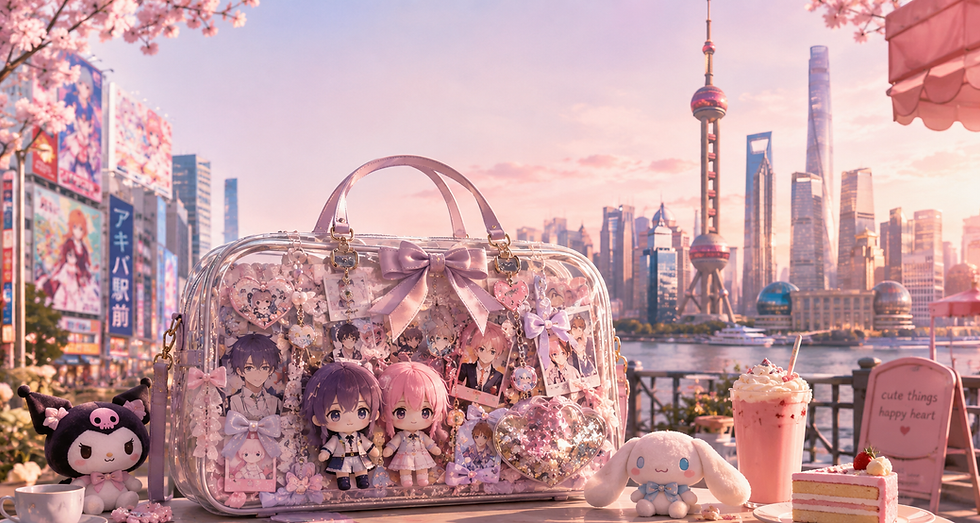
Originally born in Japan, the ita bag (痛バッグ), literally meaning "painful bag", earned its unusual name because fans would jokingly say it was "painful" for both the eyes and the wallet. Filled with dozens of badges and collectibles dedicated to a favorite anime character, idol or video game, these bags became a symbol of devotion within Japanese fandom culture. They were especially common at anime conventions, concerts and fan events, where enthusiasts proudly displayed their collections.
Japanese Kawaii fashion Japanese Sanrio themed cafe Japanese fashion.
While Japan introduced the concept, China transformed it into something much bigger.
Known locally as tongbao (痛包), the trend has become a lifestyle rather than an occasional hobby. Across cities like Shanghai, Beijing, Chongqing and Guangzhou, it is no longer unusual to see young people carrying beautifully decorated bags to cafés, shopping malls or university campuses. The focus has also shifted. Instead of simply covering a bag with badges, Chinese fans often create elegant displays featuring 20-centimeter cotton dolls (棉花娃娃), acrylic stands, collectible cards, ribbons, lace and coordinated accessories arranged almost like miniature works of art.
Minis Chongqing Chinese fashion Chinese cute dresses.
This evolution is closely connected to China's booming guzi (谷子) culture, a word derived from the English word "goods," referring to licensed merchandise from anime, games, novels, virtual idols and pop culture. Collecting has become a hobby in itself, and displaying those treasures is part of the experience. Retailers like MINISO, together with specialized guzi stores, have made character merchandise more accessible than ever, encouraging a new generation of collectors to personalize every detail of their bags.

Fashion naturally became part of the movement.
Many enthusiasts don't simply carry an ita bag, they build an entire look around it. In Japan, styles such as Lolita, Yume Kawaii, Jirai Kei and Ryousangata frequently complement these colorful accessories. China has embraced similar aesthetics while adding its own softer, elegant interpretation, often combining pastel outfits, oversized bows and delicate accessories to create picture-perfect looks inspired by social media.
The trend extends far beyond fashion. On Instagram, Xiaohongshu (RedNote) and TikTok, many collectors have started placing their favorite plush dolls or characters at the center of every photo. Instead of posing for the camera themselves, they carefully position their dolls enjoying coffee, admiring famous landmarks or strolling through gardens. These tiny companions have become the real influencers, turning ordinary travel photos into charming visual stories.
This explains why themed cafés have become essential destinations. In Seoul, places like the Cinnamoroll Café attract visitors carrying Sanrio plushies and decorated bags, while similar character cafés and pop-up stores across Asia provide the perfect backdrop for these imaginative photo sessions. It is no longer just about visiting a café, it is about creating memories with beloved characters.
Cinamonroll Cafe Seoul. Cinamonroll Cafe desserts.
Although South Korea has not embraced ita bags to the same extent as Japan or China, a similar trend has emerged through baek-kumigi (백꾸미기), or "bag decorating." Instead of filling transparent bags with collectibles, many Koreans customize luxury handbags, backpacks and totes with plush keychains, ribbons, Labubu figures, Sanrio characters and colorful charms. The result is a playful expression of personality that reflects the same desire for creativity and self-expression.
The phenomenon is no longer confined to Asia. Anime conventions across France, Germany, Italy, the United Kingdom and other European countries have introduced thousands of fans to ita bags, while Instagram, TikTok and cosplay communities continue to spread the aesthetic. Today, these once niche accessories are appearing on city streets, at comic conventions and in lifestyle content created by people who may not even consider themselves anime fans.
Instagram trends Posting your favorite character. Trends of Instagram.
What makes this trend so captivating is that it goes beyond collecting merchandise. Every ribbon, badge, plush toy and charm tells a story about its owner, their favorite series, cherished memories or simply the things that make them smile. In a world increasingly driven by individuality, ita bags have become portable expressions of identity, creativity and joy.
So, the next time you spot someone carrying what looks like a tiny display case filled with adorable characters, remember: you are not just looking at a handbag. You are looking at a carefully curated collection of passions, memories and imagination, proof that sometimes the smallest accessories tell the biggest stories.


Comments