

Discovering Jeollanam-do: Mokpo, the Coastal Soul of Korea’s Southwest

I had always dreamed of visiting Korea. Like many people who discover the country from afar, I imagined my first trip would probably begin in Seoul, surrounded by palaces, busy streets, cafés, bookstores, music, fashion and the fast rhythm that so often defines Korea’s image abroad.
But my first experience in Korea took me somewhere different: Jeollanam-do. Located in the southwest of the country, this region may not always be the first destination international travelers think of, yet it left a deep impression on me. Instead of the Korea I had mostly seen through screens, I discovered coastal cities, peaceful landscapes, generous food, local traditions, historical places and a slower rhythm shaped by nature and the sea.
That journey inspired me to start a short series dedicated to Jeollanam-do, hoping to share the charm of this region with those who may not yet know how beautiful and diverse it is. So through my next four articles, I will introduce several destinations that reveal different sides of Korea’s southwest: Mokpo, Suncheon, Naju and Yeosu.
Mokpo, where the sea shapes the city

The first stop is Mokpo, a historic port city where the sea is never far away. With its mountain views, marine cable car, coastal walking decks, old downtown streets, seafood restaurants and aesthetic cafés, Mokpo offers a beautiful introduction to Jeollanam-do and to a quieter, more local side of Korea.
Located on Korea’s southwestern coast, Mokpo has long served as an important port and a gateway to the islands of the Dadohae Sea. It does not reveal itself through speed - its charm is quieter, found in the light over the water, the silhouettes of ships near the harbor, the smell of seafood in local restaurants and the feeling of walking through a city shaped by the sea. Unlike destinations that immediately impress through scale or noise, Mokpo stays with you more slowly, through its views, flavors and atmosphere.
Mokpo Marine Cable Car, a ride above mountains and ocean

One of the most memorable ways to see Mokpo is from above. The Mokpo Marine Cable Car connects Bukhang Station, Yudalsan Station and Gohado Station, crossing a route of around 3.23 kilometers over the city, mountain and sea.
The ride gives visitors one of the clearest impressions of Mokpo’s geography. From the cabin, the city appears between land and water: Yudalsan Mountain rises behind the downtown area, the harbor opens toward the sea, bridges stretch across the coastline and islands seem to float in the distance.
It is especially beautiful around sunset, when the colors soften and the city slowly begins to light up. For a first-time visitor, the cable car is not only a tourist attraction, but also a visual introduction to Mokpo’s identity. From above, it becomes easy to understand why the sea is such an important part of the city’s rhythm.
Goha-do, walking beside the blue horizon

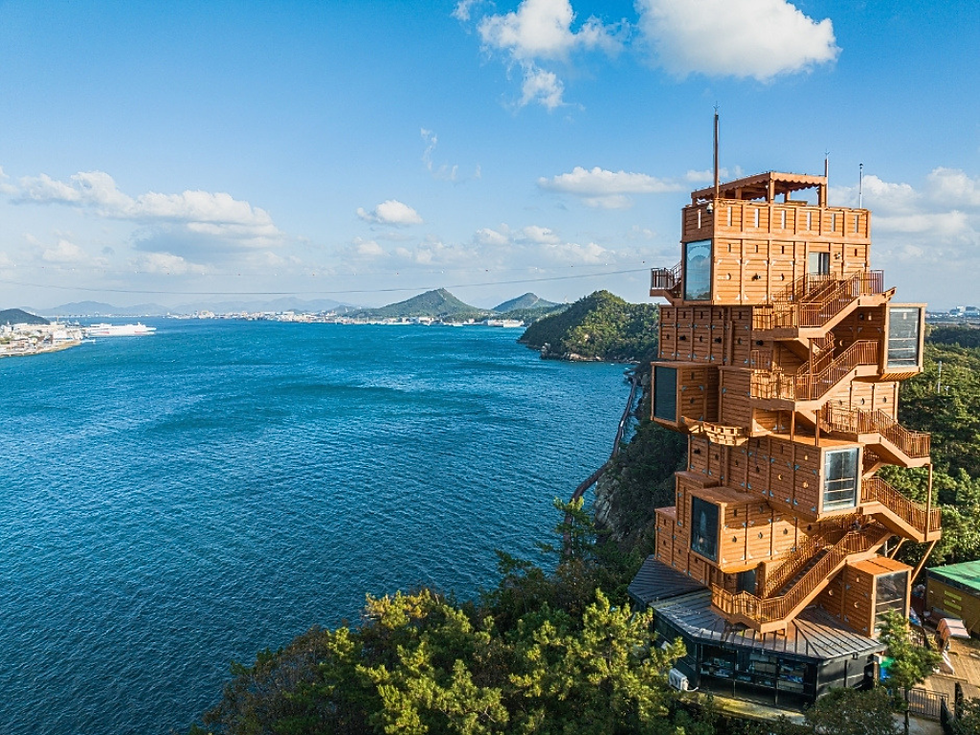
After crossing the sea by cable car, Goha-do Island offers one of Mokpo’s most peaceful experiences. The island is connected to the city by Mokpo Bridge and can also be reached through the marine cable car. Its observatory is inspired by panokseon warships and commemorates the island’s connection to Admiral Yi Sun-sin, while also offering wide views over Mokpo and the surrounding sea.
One of the most beautiful places on the island is the Goha-do coastal deck, often remembered by visitors for its long wooden path along the water. Walking there feels very different from simply looking at the sea from a distance. The deck brings you closer to the coastline, with the sound of waves, the open horizon and the quiet landscape of the island surrounding you.
It is the kind of place that invites you to slow down. After the height and movement of the cable car, Goha-do offers a calmer perspective: Mokpo seen through walking, silence and sea air. For those who enjoy photography, it is also one of the most atmospheric spots in the city.
Yudalsan Mountain, the heart of Mokpo’s views

Yudalsan Mountain is another essential stop for anyone visiting Mokpo. Although it is not very high, its position in the center of the city makes it one of the best viewpoints in the area. From its trails and observation points, visitors can see the port, the islands, the bridges and the city spreading below.
The mountain gives Mokpo a strong sense of place. It stands between the old downtown and the sea, connecting nature, history and everyday life. Walking around Yudalsan is not only about reaching a viewpoint, but also about feeling how closely the city is built around its landscape.
For travelers who enjoy quieter moments, Yudalsan is a good place to pause between other visits. It offers another kind of beauty: less spectacular than the cable car, perhaps, but more intimate and grounded in the city itself.
Old downtown and traces of modern history

Mokpo is not only a coastal destination. Its old downtown also preserves important traces of Korea’s modern history. The city developed as an open port, and several historical buildings still reflect the complex layers of Korea’s modern and colonial past.
Walking through this area gives Mokpo more depth. The streets feel different from the waterfront: quieter, older and marked by another rhythm. Museums such as Mokpo Modern History Museum No. 1 and No. 2 help visitors understand the city beyond its scenery, showing how Mokpo was marked by trade, urban change and historical memory.
This part of the city is important because it prevents Mokpo from being seen only as a place of beautiful views. Its charm also comes from the coexistence of history and everyday life, from old buildings standing near cafés, small shops and streets that still carry the atmosphere of a port city.
Gatbawi Rock and the cultural coastline

Another representative place in Mokpo is Gatbawi Rock, a natural sandstone formation located along the coast. Its name comes from its shape, which is said to resemble two people wearing traditional Korean hats called “gat.” The area is especially pleasant for a walk by the water, combining natural scenery with cultural attractions nearby.
Around Gatbawi, visitors can also find museums and cultural spaces, making it a good stop for those who want to combine coastal views with a slower cultural visit. This side of Mokpo shows how nature, maritime heritage and local identity often overlap in the city.
It is also a nice place to experience Mokpo without rushing. Whether you come for the rock formation itself, the museums or simply the view over the water, the area offers another reminder that Mokpo’s beauty is often found along the edges of the sea.
Seafood and the taste of Mokpo

Food is one of the most memorable ways to experience Mokpo. As a coastal city, Mokpo is closely connected to seafood, and many of its representative dishes reflect the richness of the surrounding sea. Local specialties include thin-legged octopus, fermented skate, croaker, crab, hairtail, flounder, sole, blackmouth angler and rockfish. These flavors are part of what makes Mokpo’s culinary identity so distinctive within Jeollanam-do.
Among the most famous dishes is hongeo samhap, a combination of fermented skate, boiled pork and aged kimchi. Its strong flavor may surprise first-time visitors, but it remains one of Mokpo’s most iconic food experiences. Other options, such as grilled fish, marinated crab, seafood stews and seasonal raw fish, offer a more accessible way to enjoy the city’s coastal cuisine.
During my visit, I had the chance to try this side of Mokpo at Sudam, where the meal felt generous, elegant and closely connected to the local seafood culture. More than a single restaurant experience, it reminded me that in Mokpo, food is not just part of the trip, but one of the best ways to understand the city’s relationship with the sea.
Cafés and slower moments in the city

Beyond its seafood restaurants and historical sites, Mokpo also has many cafés where travelers can pause between visits. These spaces add a softer rhythm to the city, especially after walking along the coast, taking the cable car or exploring the old downtown area. Between walks, viewpoints and seaside routes, cafés can become small moments of rest and observation.
One example is Suksan Café & Bakery, a spacious café with a calm atmosphere and a contemporary design. It offers the kind of pause that fits well into a Mokpo itinerary: a place to sit down, have coffee or dessert and enjoy a slower moment before continuing the journey.
Mokpo by evening

Mokpo becomes even more atmospheric in the evening. As the light changes, the waterfront areas, bridges and harbor views begin to feel softer and more romantic. The city’s night scenery is not overwhelming, but it has a quiet charm that suits its coastal identity.
Peace Plaza and the areas near the water are good places for an evening walk. Depending on the season and schedule, visitors may also enjoy fountain shows, night views or simply the reflection of the city lights on the sea. After a day of walking, sightseeing and eating, Mokpo’s evening atmosphere feels like the right ending. It is calm, open and deeply connected to the ocean, just like the city itself.
How to get to Mokpo from Seoul

Mokpo is easy to reach from Seoul, which makes it a practical destination for travelers who want to explore Jeollanam-do. The fastest and most convenient option is usually the KTX from Yongsan Station to Mokpo Station, with a travel time of around two and a half hours. SRT trains from Suseo to Mokpo are another option, with a similar travel time. Slower trains such as Mugunghwa and Saemaul also connect Seoul and Mokpo, but they take around five hours.
Travelers can also take an express bus between Seoul and Mokpo, with a journey of around four and a half hours. This can be a useful option depending on budget, departure location or ticket availability. Once in Mokpo, taxis and local buses can be used to reach the main attractions. Some central areas, especially around the old downtown and Mokpo Station, can be explored on foot, while places such as Goha-do, Yudalsan, Peace Plaza and Gatbawi may be easier to combine by taxi, bus or cable car.
Why Mokpo is worth visiting
Mokpo is a destination for travelers who want to discover Korea beyond its most familiar images. It offers coastal scenery, modern history, local food, island views, atmospheric cafés and quiet walking paths, all within a city that feels close to the sea at every moment.
As the first stop in this Jeollanam-do series, Mokpo feels like the right beginning. It introduces the region through the sea, through food, through history and through a slower rhythm that stays with you after you leave. For anyone looking to experience a different side of Korea, Mokpo is a beautiful reminder that some journeys begin in the places that quietly surprise you.


I really like the Free Web Games variety available in browser gaming. Some days I want a fast-paced shooting game, while other days I would rather relax with an idle game or spend an hour solving puzzles. Having all those different experiences available in one place makes choosing something to play much easier.