

10 Things Inside Korean Homes That Will Confuse Foreigners


You walk into a Korean home and everything looks normal… until you notice the floor is heated, the bathroom has no shower enclosure, there's a refrigerator just for kimchi, and the toilet has a control panel!
Welcome to Korean home life!
If you have watched K-dramas, you have probably already seen some of these things without stopping to wonder about them. Someone slips off their shoes at the entrance. A family sits around a low table on the floor. A bathroom looks strangely open. There is a mysterious panel on the wall that seems to control half the apartment. The first time you notice these things, they can feel unfamiliar.
I remember watching My Royal Nemesis recently and noticing one such moment; Cha Se-Gye realising that Shin Seo-ri’s floor had gone cold. The ondol had stopped working. I did not know what ondol was at the time, but something about his concern, the way a cold floor felt like something had gone wrong with the home itself, stayed with me. It was the moment I started wondering, what is the Korean home really like on the inside?
That question stayed with me because the more I looked, the more I realised that so many things inside a Korean home are connected to the way people actually live. A floor that is meant to be warm. A bathroom designed to get wet. Shoes that stop at the entrance. A refrigerator that exists almost entirely for kimchi.
What might look unusual at first often makes perfect sense once you understand it.
Here are 10 things inside Korean homes that might confuse you at first, but make so much more sense once you know why they are there.
1. The Floor Is Basically a Giant Heater

The first one, of course, is the floor. Korean homes have traditionally been built around 온돌 (ondol), an underfloor heating system that warms rooms from beneath. Modern systems have evolved, but the basic idea remains wonderfully simple, instead of warmth coming only from a radiator or heater, the floor itself becomes warm.
And once you understand that, the way people use the floor starts making much more sense. Families sit on it. Children do their homework there. People gather around low tables to eat. In some homes, people even sleep on the floor.
Coming from a place where the floor is usually just something you walk on, this can feel unusual. But imagine a cold winter evening with warmth coming gently up beneath you. Suddenly, the floor does not seem like such an ordinary part of the home anymore. It is part of the comfort.
And that moment in My Royal Nemesis made much more sense to me after I learned what ondol was. Cha Se-Gye was not simply noticing that the floor was cold. Something that was supposed to make the
home warm had stopped working. That is a very different thing.
2. ‘다녀올게요’ and ‘다녀왔어요’: I am Leaving. I am Home.

In a Korean home, you never simply leave or arrive. You announce it and the home answers back. When heading out, Koreans say ‘다녀올게요’ (pronounced Dhannyeo olkeyo) meaning “I am going and I will be back.” When they return they say, '다녀왔어요’ (pronounced Dhannyeo wasseoyo) meaning “I am home.” Those still inside respond with ‘잘 다녀오세요; (pronounced Chhal dhannyeo oseyo) meaning “Welcome back.”
There is something quietly beautiful about it. These small phrases, said every single day are a family’s way of seeing saying: I see you. I know when you are here and when you are not. I am glad when you come back. Rooted in the Confucian value of family connectedness, they are a daily ritual of acknowledgement, a reminder that in a Korean home, no one disappears without being noticed and no one returns without being welcomed.
Even adult children say it. Even when life gets busy. If you have watched a K-drama and wondered why characters always seem to announce themselves at the door, well, now you know. It is not a part of the script. It is just what home feels like.
3. Brushing Teeth after every Meal. Yes, every Single One.

This one genuinely surprises most people the first time they hear it. Koreans brush their teeth after every meal. Not morning and night. After breakfast, after lunch, after dinner.
In Korean offices, it is completely normal to excuse yourself after lunch and return a few minutes later, toothbrush in hand. Bathrooms often have small holders specifically for this purpose. It is woven into the rhythm of the day so naturally, that most Koreans do not think of it as anything remarkable. It simply is what you do after you eat.
It reflects something I genuinely admire about Korean culture. The idea that health and cleanliness are not occasional efforts, but daily active commitments. Small habits practiced consistently, as a form of
care for yourself and the people around you.
4. The Bathroom Floor Is Meant to Get Wet

This is one of those things that can make you pause the first time you see it. In many Korean homes, the shower is not completely separated from the rest of the bathroom. The sink, toilet and shower may all share the same space, with a floor drain handling the water. Which means the bathroom floor can get wet. Very wet!
If you grew up with an enclosed shower where every drop of water is supposed to stay neatly inside, this can feel strange at first. You might look around and wonder, How does everything not end up soaked? But that is the point.
The bathroom has been designed knowing that it will get wet. There is no glass door neatly containing every splash because the room itself is built to handle the water and drain it away. And I find that fascinating.
We often think of the way our own homes are designed as simply the way homes are designed. Then you see another way of doing things and realise how much of a home is shaped by the habits of the people living inside it.
5. Shoes Come Off at the Door and There May Be Slippers for Everything

You might think that once you take your outdoor shoes off at the entrance, the footwear situation is over. Not quite.
In Korean homes, taking your shoes off at the entrance is almost automatic. Many homes have a small entry area separating the place where outdoor shoes are left from the raised living area.
And then there may be slippers. House slippers for indoors. A completely different pair for the bathroom. Suddenly, entering someone's home requires a tiny lesson in footwear. Wait! Which ones am I supposed to wear?
It sounds funny, but it makes perfect sense when you think about how the home is used. If people sit on the floor, eat on the floor and spend so much of their time close to it, keeping that floor clean matters. And if the bathroom floor is wet, you probably do not want to carry that water into the rest of the house.
The outside stays at the entrance. The bathroom stays in the bathroom. And the rest of the home stays clean and comfortable. Once you understand that, taking your shoes off no longer feels like a strict rule. It just feels natural.
6. A Refrigerator Just for Kimchi

A refrigerator just for kimchi sounds slightly extraordinary until you understand how important kimchi is in Korean food culture. Some Korean households have a dedicated kimchi refrigerator designed to keep kimchi at the right temperature. It can also help prevent that unmistakable fermented smell from taking over the rest of the refrigerator.
The first time you hear about it, you might think: A whole refrigerator? Just for kimchi?
But then you remember that kimchi is not simply something that appears once in a while. For many Korean families, it is part of everyday meals.
7. Toilet Paper Often Goes in the Toilet; But Not Always

This is another small detail that can be surprisingly confusing when you first arrive in Korea. In newer buildings, flushing toilet paper is generally fine, but older plumbing can have different rules. So depending on where you are, you may find instructions asking you to put toilet paper in a nearby bin instead.
For someone who has never encountered that before, it can create a very specific kind of uncertainty.
Do I flush this?
Do I put it there?
Is that bin actually for toilet paper?
The safest thing is simply to look for the instructions in that particular bathroom rather than assuming every building works in exactly the same way.
8. The Apartment Entrance Can Have a Digital Door Lock
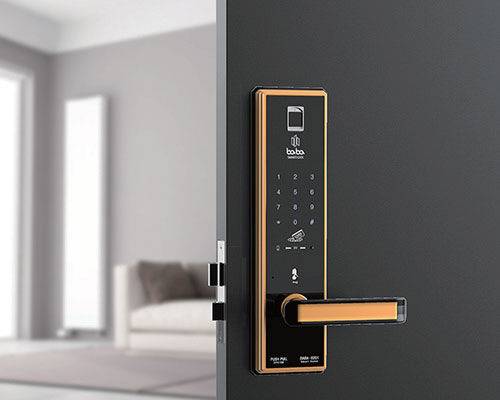
Then there are the doors. Or, more specifically, the locks. Many Korean apartments have digital door locks, so instead of carrying a traditional key, you might enter a code, use a fingerprint or card or use another electronic method depending on the lock.
For someone used to searching through a bag for a tiny metal key, it can feel wonderfully futuristic.
You come home. Type a code. The door opens.
There is something very satisfying about it. And once you get used to not carrying a key around, going back to one can suddenly feel a little old-fashioned.
9. Eating on the Floor Is Still a Normal Thing

The floor in a Korean home is not only warm. It can also be where people gather. Especially during family meals or gatherings, a low table may be brought out and everyone sits directly on the floor around it.
And because the floor is already such an important part of the home, this does not feel particularly unusual.
There is something very intimate about the arrangement. Everyone gathers around the same low table, sitting close together rather than separated by high chairs.
Once again, ondol quietly explains part of the picture. When your floor is warm and comfortable, sitting on it suddenly feels much more natural.
10. The Walls Have More Controls Than You Expected

And then there are the walls. This may be the moment when a foreigner starts wondering whether they have accidentally walked into a spaceship.
Korean apartments can have wall panels for things like floor heating, hot water, ventilation, lighting, door access and intercom functions.

There may be buttons everywhere. Little symbols. Settings you do not immediately understand. You
stand there looking at the panel thinking: Which one of these makes the floor warm?
It can be confusing at first, but once you understand what everything does, it is actually rather practical.
The home itself becomes something you can control from the wall.
What These Things Tell You About Korean Homes
Looking at all ten of these things together, what strikes me is how little of them are actually strange once you understand the thinking behind them.
The floor is warm because the floor is part of everyday life. The bathroom gets wet because it was designed to handle the water. The shoes stay at the entrance because the floor is where people sit, eat and gather. The little phrases said when someone leaves or comes home are a way of acknowledging the people you share that space with. Even the kimchi refrigerator, the digital door lock and the mysterious wall panels tell you something about the people who live inside the home. And perhaps that is what I find most fascinating!
A home is never just walls, furniture and appliances. It quietly reflects the habits, priorities and little comforts of the people who live inside it. In Korean homes, those things can be found in the warmth beneath your feet, the slippers waiting by the door, the low table gathered around a floor or a simple '다녀왔어요' that says, I am home.
The more you notice these details, the less unfamiliar they begin to feel. The next time you watch a K-drama and notice someone slipping off their shoes at the entrance, sitting comfortably on the floor, announcing that they are leaving, or standing in front of a wall panel covered in mysterious buttons, I hope you look a little closer.
Because now you know what you are really seeing. Not strange things. Just another way of making a home feel warm, familiar and lived in.

Comments