

CHUSEOK AND THANKSGIVING: TWO DIFFERENT YET SIMILAR WAYS OF COMING HOME


At first glance, Chuseok (추석) and Thanksgiving seem remarkably similar, mainly because both are harvest festivals that arrive as the seasons change, bring families back together, and are celebrated with a fastidious dinner full of delicious traditional dishes. This is why Chuseok is sometimes introduced to foreigners as "Korean Thanksgiving." Although the comparison is useful to an extent, as Chuseok and Thanksgiving share the universal ideas of harvest, gratitude, food, and family, their histories and traditions reveal two very different cultural stories. Therefore, how similar are they really?

WHAT ARE CHUSEOK AND THANKSGIVING?
Chuseok (추석) is one of South Korea's most important traditional holidays, celebrated on the 15th day of the eighth lunar month, during the full moon. The holiday traditionally celebrates the autumn harvest while bringing families together to honour their ancestors.
Thanksgiving is celebrated in the United States on the fourth Thursday of November. Today, it centres around gratitude, family gatherings, and a large shared meal. Its history is commonly associated with harvest celebrations in colonial New England, although the familiar story of the 1621 Plymouth feast represents only one part of a much more complicated history involving Indigenous peoples and European colonisation.
Both holidays therefore involve the idea of harvest, but Chuseok's traditions are more directly connected with ancestral remembrance and the lunar calendar, while modern Thanksgiving places greater emphasis on expressing gratitude and sharing a family meal.

WHAT DO CHUSEOK AND THANKSGIVING HAVE IN COMMON?
During both holidays, adults who may live far from their parents travel back to their hometowns, siblings reunite, and several generations gather around the same table. Transportation becomes crowded, roads become congested, and getting home can become an adventure of its own.
Food is at the center of both celebrations, but the meal represents something more important than you’d expect. Sitting down together becomes a way of emotionally reconnecting and reaffirming family relationships and temporarily stepping away from everyday routines.
Both holidays also encourage people to think about what they have received during the year, whether this means a successful harvest, family, health, or simply having another opportunity to spend time together.
HOW IS GRATITUDE SHOWN DURING CHUSEOK AND THANKSGIVING?
Thanksgiving makes gratitude explicit, as even its name asks people to give thanks, while Chuseok expresses gratitude differently, which is through food made from the year's harvest, journeys home, remembrance of ancestors, and the act of gathering beneath the autumn full moon.
Thanksgiving is a more direct celebration based on the idea of saying thank you directly, while Chuseok often expresses the idea of gratitude it through remembering the past, the ancestors and their contribution to the present world.
HOW IS THE FOOD DIFFERENT WHEN IT COMES TO CHUSEOK AND THANKSGIVING?

The most typical Chuseok food is songpyeon (송편), which are small half-moon-shaped rice cakes traditionally filled with ingredients such as sesame seeds, beans, or chestnuts. Families usually prepare them together, and their shape is connected with the ideas of prosperity and the growing moon.

A Chuseok table may also include jeon (savoury Korean pancakes), japchae, seasonal fruits, meat dishes, vegetables, and freshly harvested rice.

On the other hand, the Thanksgiving dinner is famously dominated by the turkey. Stuffing, mashed potatoes, gravy, cranberry sauce, sweet potatoes, vegetables, and pumpkin pie are among the foods commonly associated with this popular American celebration.
There is an interesting similarity beneath all those differences: both tables showcase the abundance of autumn through typical local food. South Korea gives us songpyeon and freshly harvested rice, while Thanksgiving gives us turkey and pumpkin pie.
WHAT ARE THE MOST IMPORTANT TYPICAL FAMILY TRADITIONS DURING CHUSEOK AND THANKSGIVING?
If we analyse the typical family traditions that happen during Chuseok and, respectively, Thanksgiving, we can clearly notice that one celebration looks deliberately backwards toward one's ancestors, while the other tends to focus more explicitly on gratitude in the present.

Chuseok traditionally involves practices that extend beyond the family meal. Some families perform charye (차례), an ancestral memorial rite involving carefully arranged food offerings. Families may also practise seongmyo (성묘) by visiting ancestral graves, while beolcho (벌초) involves clearing vegetation around family graves before the holiday. These traditions create an important connection between the living and previous generations. Chuseok is therefore not simply about returning to your parents' home, but also symbolically returning to your family's roots.
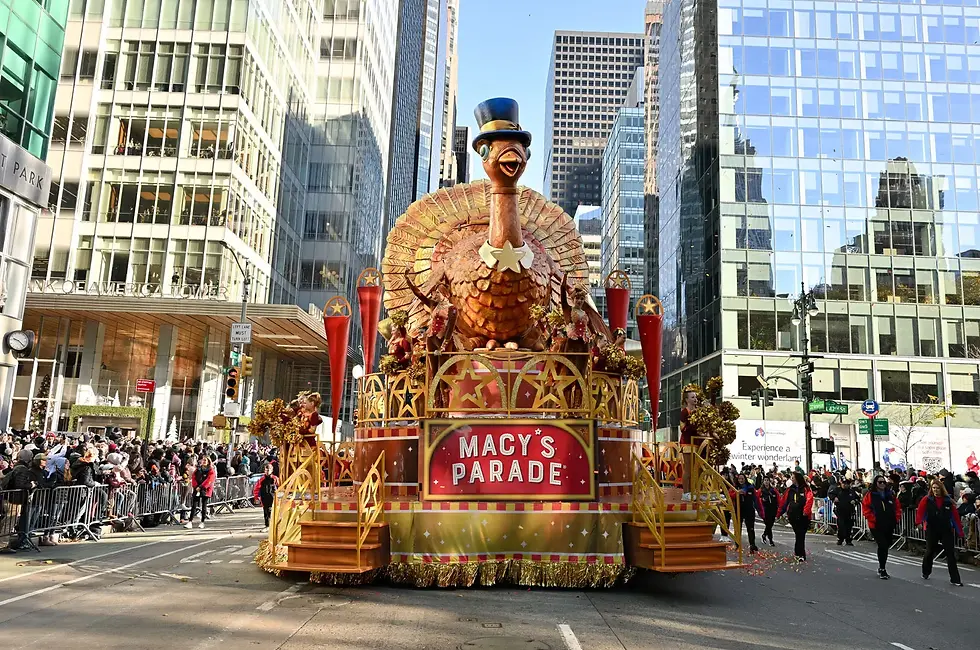
Thanksgiving generally has no equivalent ancestral ritual. However, American families develop their own traditions such as saying what they are thankful for, watching the Macy's Thanksgiving Day Parade, following American football, cooking together, or simply spending the afternoon talking around the table.
HOW DO PEOPLE HAVE FUN DURING CHUSEOK AND THANKSGIVING?
Traditional Chuseok celebrations included folk games, wrestling, dancing, and community activities. One of the most beautiful celebrations is ganggangsullae (강강술래), traditionally performed by women who join hands and dance in a circle beneath the full moon. Ssireum (traditional Korean wrestling), samulnori (traditional percussion quartet), and talchum (mask dance) are other activities historically associated with the holiday. Today, families may also watch television specials, travel, visit cultural attractions, or simply enjoy having several days together.

Thanksgiving entertainment looks more typically American: football games, parades, television, board games, and the increasingly strategic art of deciding who gets the last slice of pie. Despite all the different activities, the underlying purpose is surprisingly similar, namely spending time together and disconnecting temporarily from work and school.

WHAT SPECIFIC GIFT-GIVING CUSTOMS ARE ASSOCIATED WITH CHUSEOK AND THANKSGIVING?
Gift-giving has become an important characteristic of modern Chuseok. Korean supermarkets and department stores are filled with beautifully packaged Chuseok gift sets, ranging from fruit, meat, and seafood to cooking oil, health products, cosmetics, and even premium Spam sets. In Korea, beautifully packaged Spam gift sets are genuinely popular holiday presents, a detail that tends to surprise international visitors until they learn about the product's distinctive history and status in post-war Korean food culture.

Thanksgiving itself is generally not a gift-giving holiday. Guests are more likely to arrive with small tokens of appreciation such as wine, flowers, dessert, or another contribution to dinner rather than formal presents.

HOW ARE CHUSEOK AND THANKSGIVING CHANGING NOWADAYS?
Neither celebration is frozen in tradition, so there are certain traditions that have been changing and adapting to the modern world.
For example, not every Korean family performs charye today because the attitudes toward elaborate ancestral rites have changed considerably. Younger generations may prefer shorter ceremonies, travel during the holiday, meet friends, or use the long break simply to rest alone at home.
Thanksgiving has evolved too. Friendsgiving, which is Thanksgiving celebrated among friends, has become increasingly familiar, while families increasingly adapt traditional menus to their own cultural backgrounds.
Both holidays therefore reveal something interesting about tradition: it survives partly because people keep changing it. The details naturally evolve, while the emotional centre, which is constituted from the ideas of food, belonging, reunion, and gratitude, remains recognisable and everlasting.
WHY ISN'T CHUSEOK SIMPLY "KOREAN THANKSGIVING"?
Calling Chuseok "Korean Thanksgiving" is convenient when explaining the holiday quickly, but it can flatten an extraordinarily rich Korean tradition.
Chuseok has its own history, rituals, foods, folklore, and relationship with ancestor veneration. It developed independently of American Thanksgiving and should be understood within Korean agricultural and family traditions.
A better way to think about them is as cultural cousins rather than equivalents. Both grew from societies deeply shaped by agriculture and both transformed harvest gratitude into family celebrations, but each expresses those ideas through its own history and cultural values.
WHAT SHOULD FOREIGNERS KNOW ABOUT CHUSEOK AND THANKSGIVING?
If you're in South Korea during Chuseok, expect one of the year's largest periods of domestic travel. Train and bus tickets can sell out quickly, highways become congested, and some independently owned businesses and restaurants close. At the same time, staying in Korea during Chuseok can be a wonderful cultural experience because palaces, museums, folk villages, and cultural institutions often organise traditional games, performances, and special programmes for visitors.


If you're invited to a Korean family's Chuseok gathering, bringing a small gift is thoughtful. More importantly, observe how your hosts celebrate rather than assuming every family follows the same traditions, because Modern Chuseok can look very different from one household to another.
In conclusion, Chuseok and Thanksgiving may serve songpyeon and turkey on very different tables, but both answer a surprisingly universal human wish: to come home, share food, and remember that our lives are connected to other people’s lives despite the distance and the very different daily routines. The traditions specific to Chuseok and Thanksgiving remind us that expressing gratitude doesn't always look the same across cultures, and that's exactly what makes comparing them so fascinating.
Therefore, if you could spend one autumn experiencing both celebrations, which table would you sit at first: Chuseok or Thanksgiving?


Comments