

BAEKJUNG (백중) – HONOURING FARMERS, ANCESTORS, AND KOREA’S RURAL HERITAGE
- Elena-Daniela Sandu

- 1 hour ago
- 4 min read

WHAT IS BAEKJUNG?
Baekjung (백중) is a traditional Korean holiday celebrated on the 15th day of the seventh lunar month, usually falling in August. Once considered one of the most important holidays for farming communities, Baekjung marks the end of the most demanding period of agricultural work before the autumn harvest.
The holiday combines folk traditions, Buddhism, and agricultural customs, celebrating the hard work of farmers while also remembering ancestors and praying for a plentiful harvest. Although it is no longer a major public holiday, Baekjung remains an important part of Korea's cultural heritage.
WHY IS BAEKJUNG CELEBRATED?
Baekjung was traditionally a day of gratitude and rest. After months of working in the rice fields during Korea's hot and humid summer, farmers were rewarded with a day to relax, enjoy festive meals, and celebrate with their communities.
The holiday also has Buddhist roots. It is associated with the story of Mokryeon (Mulian), a devoted monk who prayed and made offerings to save his deceased mother from suffering in the afterlife. Because of this, many Buddhist temples still hold memorial ceremonies known as Baekjungjae (백중재) to honour ancestors and departed souls.

HOW DO PEOPLE CELEBRATE BAEKJUNG?
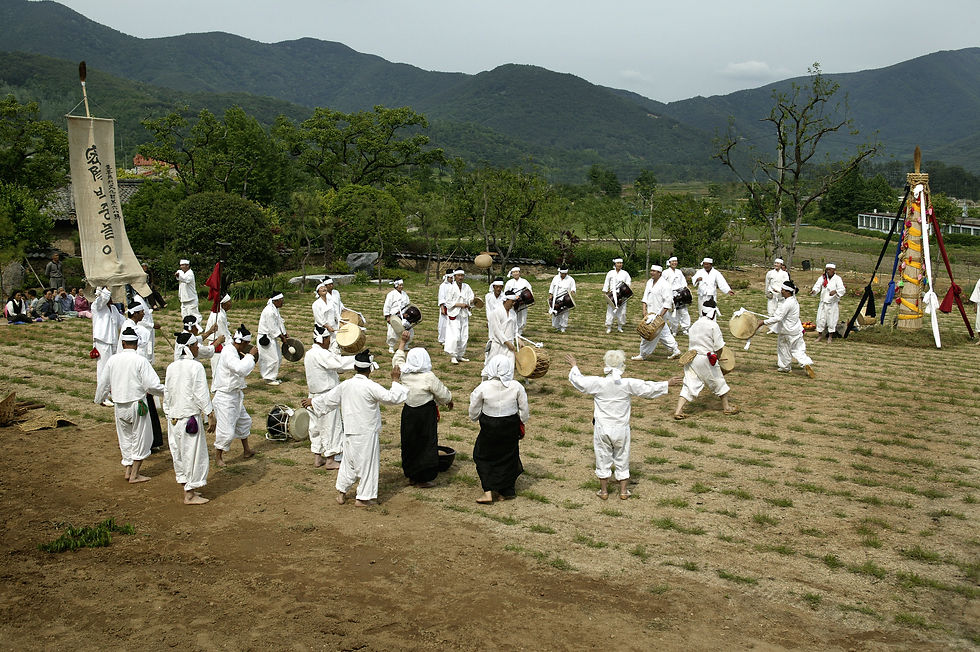
Today, Baekjung is celebrated mainly in Buddhist temples and rural communities rather than nationwide. Families may visit temples to pray for deceased relatives, while some villages organise cultural festivals that preserve traditional customs. In the past, landowners rewarded farm workers with generous meals, new clothes, and a well-deserved day off, making Baekjung one of the happiest occasions of the farming calendar.
WHAT FOODS ARE ASSOCIATED WITH BAEKJUNG?
Unlike Seollal or Chuseok, Baekjung does not have one signature dish. Instead, families traditionally prepared generous meals using fresh seasonal ingredients. Common foods included: freshly harvested vegetables, rice cakes (tteok), noodles, meat dishes, seasonal fruits, and makgeolli (traditional Korean rice wine). The emphasis was on abundance, sharing, and celebrating the rewards of hard work.
WHAT TRADITIONS AND CUSTOMS ARE ASSOCIATED WITH BAEKJUNG?
One of the defining features of Baekjung was its lively village celebrations. Communities gathered to enjoy nongak (traditional farmers' percussion music), folk dances, ssireum (traditional Korean wrestling), tightrope walking, and community games and performances. At Buddhist temples, memorial services and offerings are still held to honour ancestors and wandering spirits, reflecting the holiday's spiritual significance.

WHAT ARE SOME INTERESTING FACTS AND CURIOSITIES ABOUT BAEKJUNG?
· Baekjung is sometimes called the "Farmers' Holiday" because it celebrates those who worked the land.
· It shares similarities with Japan's Obon and China's Ghost Festival, as all three include prayers and offerings for the deceased.
· Many traditional nongak performances associated with Baekjung are now recognised as part of Korea's Intangible Cultural Heritage.
· While many young Koreans are unfamiliar with Baekjung today, it remains an important tradition in Buddhist communities and rural regions.
WHAT CAN YOU DO DURING BAEJKUNG?
If you're visiting Korea during Baekjung, you can experience the holiday by attending a Baekjungjae ceremony at a Buddhist temple or visiting regional cultural festivals that preserve traditional farming customs.
The Korean Folk Village in Yongin and the National Folk Museum of Korea in Seoul occasionally organise demonstrations of traditional agricultural life, folk performances, and seasonal customs. Some local communities also host nongak performances and cultural events that bring the spirit of Baekjung back to life.

WHAT SHOULD FOREIGNERS KNOW ABOUT CHILSEOK?
Baekjung is no longer a major public holiday, so daily life continues as usual across South Korea. Because it is less commercialised than Seollal or Chuseok, it offers visitors a unique opportunity to discover a different side of Korean culture.
If you attend a temple ceremony, remember to dress modestly, speak quietly, and respect local customs. Baekjung is both a celebration of community and a time of remembrance, making it a meaningful occasion to learn about Korea's rural traditions and Buddhist heritage.
WHAT TO EXPECT IN 2026
In 2026, Baekjung falls on Thursday, August 27, following the lunar calendar. As in previous years, the holiday will be observed primarily at Buddhist temples rather than through nationwide public celebrations. Major temples such as Bongeunsa and Jogyesa in Seoul are expected to hold Baekjungjae (백중재) memorial ceremonies, where monks perform chanting rituals, prayers, and offerings dedicated to deceased family members and ancestors. These ceremonies reflect the Buddhist values of compassion, gratitude, and filial piety.
Visitors are welcome to attend many of these temple services respectfully, offering a unique opportunity to experience one of Korea's lesser-known but meaningful Buddhist traditions. Some regional communities and folk museums may also organise cultural programs featuring nongak (farmers' percussion music), traditional performances, and exhibitions highlighting Korea's agricultural heritage and the historical significance of Baekjung.

In conclusion, Baekjung is a tribute to the Korean people who cultivated the land, the communities they built, and the ancestors they remembered. Though no longer celebrated widely like Chuseok or Seollal, Baekjung offers a fascinating glimpse into Korea's agricultural roots and enduring cultural values. Would you like to experience a traditional Korean festival that celebrates gratitude, community, and the changing of the seasons?


Comments